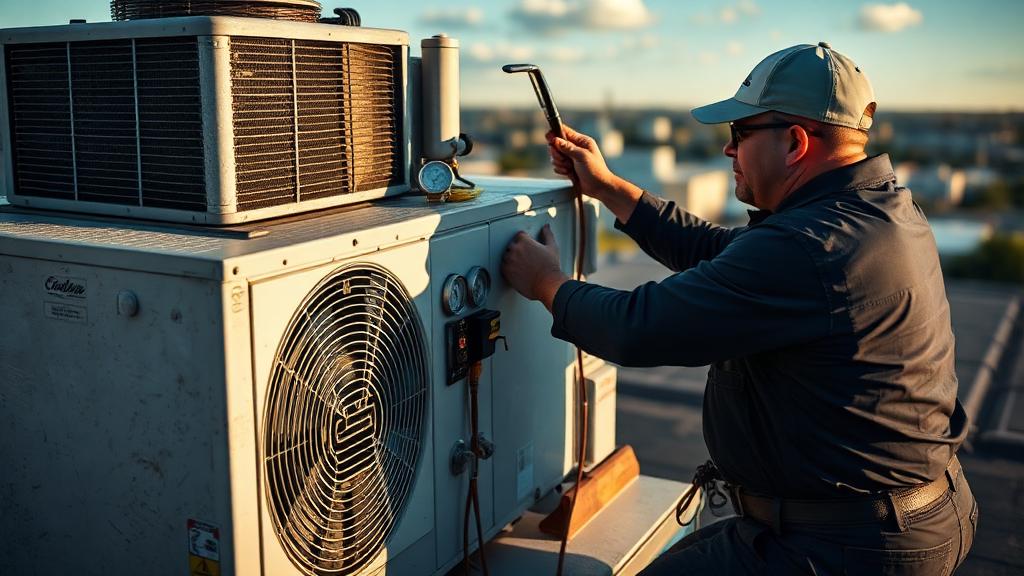
HVAC Technician
Skilled Trades
Keep heating, cooling, and ventilation systems running safely.
Why it matters here: Year-round DMV demand for heating and cooling service techs.
Labor Market — DMV Region
Sourced from U.S. Bureau of Labor Statistics OEWS releases (DMV metro and nationwide) plus MD, VA, and D.C. workforce agencies.
Local cost of living is why DMV pay often differs from the national median.
- DMV & state figures: U.S. Bureau of Labor Statistics — OEWS wage & employment estimates and Employment Projections, with OEWS area pay relatives for the Washington–Arlington–Alexandria metro, Maryland, D.C., and Northern Virginia · View source
- Occupation profiles & skills: O*NET OnLine (U.S. Department of Labor) · onetonline.org
All salary figures are published estimates for groups of workers, not offers or guarantees for any individual role.
Education & Career Pathways
Multiple ways to get here — pick the one that fits your life.
Career Progression
How you can grow — with expected salary at each step.
- Entry-level HVAC TechnicianLearning the role, supervised work, building core skills.$51,230
- HVAC Technician (experienced)Independent work, mentoring newer team members.$65,190
- Senior / Lead HVAC TechnicianOwning projects, specialization, higher responsibility.$82,840
- Manager or specialist trackSupervising a team or moving into a high-demand specialty.$99,408
Skills Required
What you'll actually do — and how you'll be judged.
Rooftops, basements and homes, seasonal peaks, on-call rotation
Where you work
Rooftop units in July heat, crawl spaces in January cold, and mechanical rooms year-round.
Hours and schedule
Weekday service calls with heavy overtime during the first heat wave and first freeze; on-call rotations are standard.
Pace and pressure
Call-to-call diagnostics; peak season is relentless, shoulder seasons are calm.
Who you work with
Mostly solo in a van, with a dispatcher and a supervisor by phone.
Physical demands
Ladder climbing, lifting equipment, working in extreme heat and cold, tight attic and crawl spaces.
What people wear
Company uniform, boots, gloves, safety glasses.
Remote reality
None.
Workplace culture: what's normal here
- Refrigerant handling is EPA-regulated and logged; nobody vents to atmosphere.
- Diagnosing before replacing is what separates a tech from a parts-swapper.
- Customers are anxious and hot or cold — calm explanation is half the job.
Source: U.S. Bureau of Labor Statistics, Occupational Outlook Handbook — Work Environment, with regional detail for the DMV.
Official data behind this career
Federal statistics for DMV Region, translated into plain language.
Washington–Arlington–Alexandria, DC–VA–MD–WV metro area
Source: U.S. Census Bureau — ACS 2019–2023 5-year estimates (tables DP03, DP02, DP05)
- The DMV functions as one labor market: workers routinely cross state lines to get to work.
- The largest employment destinations are D.C., Fairfax County and Montgomery County.
Top places these workers go to work
Source: U.S. Bureau of Economic Analysis — BEA regional GDP and personal income, most recent published year
Private-sector payroll data from ADP. It is a supplemental near-real-time indicator and does not replace BLS government employment statistics.
Source: ADP National Employment Report — Most recent monthly ADP National Employment Report
- 1U.S. Bureau of Labor Statistics (OOH, OEWS, Employment Projections, CES) — Primary source for occupation wages, outlook, projected openings, education and training.
- 2U.S. Census Bureau — American Community Survey — Primary source for income, educational attainment, labor force and demographic context by place.
- 3Census LEHD (LODES / OnTheMap) — Primary source for where workers live versus where they work, and local workforce flows.
- 4U.S. Bureau of Economic Analysis — Primary source for regional GDP, industry contribution, compensation and personal income.
- 5ADP National Employment Report — Supplemental near-real-time private-sector employment and pay indicator. Not a replacement for BLS.
Figures describe groups of workers, not any one person. Where an official figure is not published for a category, this page says “Data unavailable for this category.” rather than estimating.
Related Careers
Explore similar occupations with overlapping skills.
Install and repair the electrical systems buildings run on.
Join metal parts for construction, manufacturing, and infrastructure.
Install and repair the water, gas, and drainage systems buildings need.
Frame, build, and finish structures with your hands and tools.